
So, What We Do Instead
20 Years in Haiti: Lessons on Christian Missions

The book of Ecclesiastes says that with much wisdom comes much sorrow; the more knowledge, the more grief. There are things you cannot unsee once you’ve seen them. Systems you can no longer pretend are neutral once you understand how they actually function. And when you begin connecting dots within systems people are taught to assume are inherently good, it comes at a cost.
Years ago, not long after we moved to Haiti, something became increasingly difficult for me to ignore: modern Christian missions — at least in Haiti — functions as a two-tier system. And although there is some crossover, the tiers ultimately work in opposition to each other. So it’s important to understand the difference.
Tier 1 is the model most people recognize and, if we’re honest, feel good about supporting. Across Haiti, you see the same setup over and over: a compound with a church, a school, an orphanage, maybe a clinic. It presents itself as a development model — the Gospel moving beyond the walls of the church to meet real needs through education, healthcare, and care for the vulnerable. On the surface, it looks like exactly what should be happening. In many ways, it feels like the Church at its best.
But zoom out far enough, and a different reality comes into focus: Tier 1 is also big business. And like all big business, it has gatekeepers. Pastors, missionaries, and organizations operating inside this model often control the flow of resources into entire communities. In places where the local economy is already weak or broken, Tier 1 does not merely exist alongside the economy — it becomes the economy.
This is where the water starts getting murky.
Because whenever someone’s livelihood becomes dependent on maintaining a system, the natural incentive is to protect it. Yet in the non-profit world, this creates a peculiar inversion: welfare begins replacing the economy itself. Americans tend to recognize and resist this dynamic instinctively at home, yet often become complicit exporting it overseas in Christian packaging. And if you threaten the system — or even question it too directly — you quickly discover how territorial it can become. Step on the wrong toes, challenge the wrong model, and even ministers of the Gospel may try to push you toward the sidelines.
Tier 1 runs on a stable baseline fuel source: child sponsorships and short-term mission trips. Poverty becomes the marketing engine — not always intentionally, but functionally. It mobilizes donors, fills planes, warms hearts, sustains operations, and most importantly, scales.
One organization built a $44 million operation around a 21,500-square-foot orphanage in Fond Parisien, Haiti.
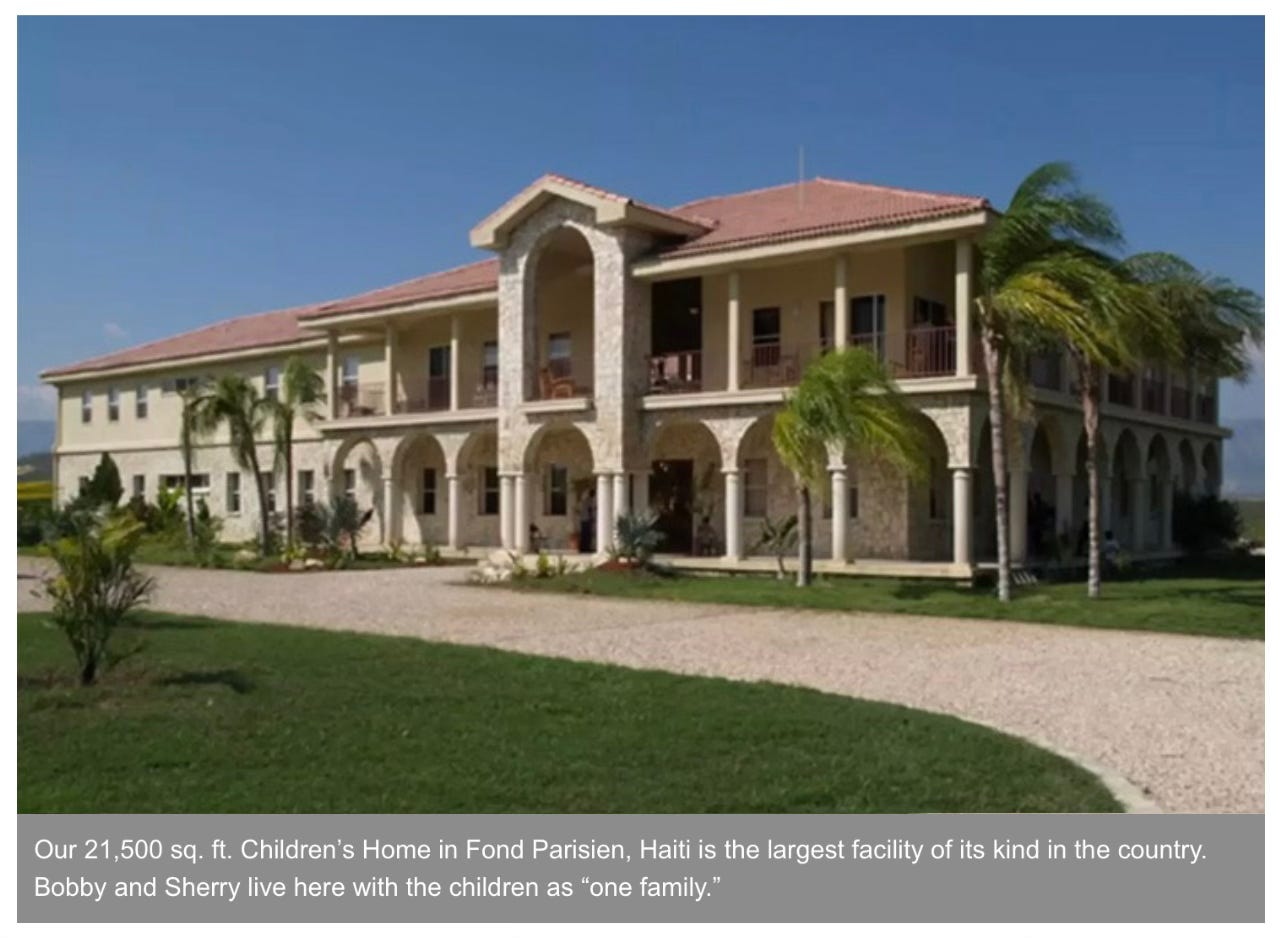
Over the past twenty years, we’ve watched the Tier 1 model evolve even further through social media and influencer culture, where the lines between missions, media, and spectacle blur almost beyond recognition. Recently, self-described “high-risk missionary” Victor Marx sought to protect this same orphanage from gangs by trafficking arms into Haiti — something oddly brought to light by Candace Owens while Marx himself campaigns for governor of Colorado. You can’t make this stuff up.
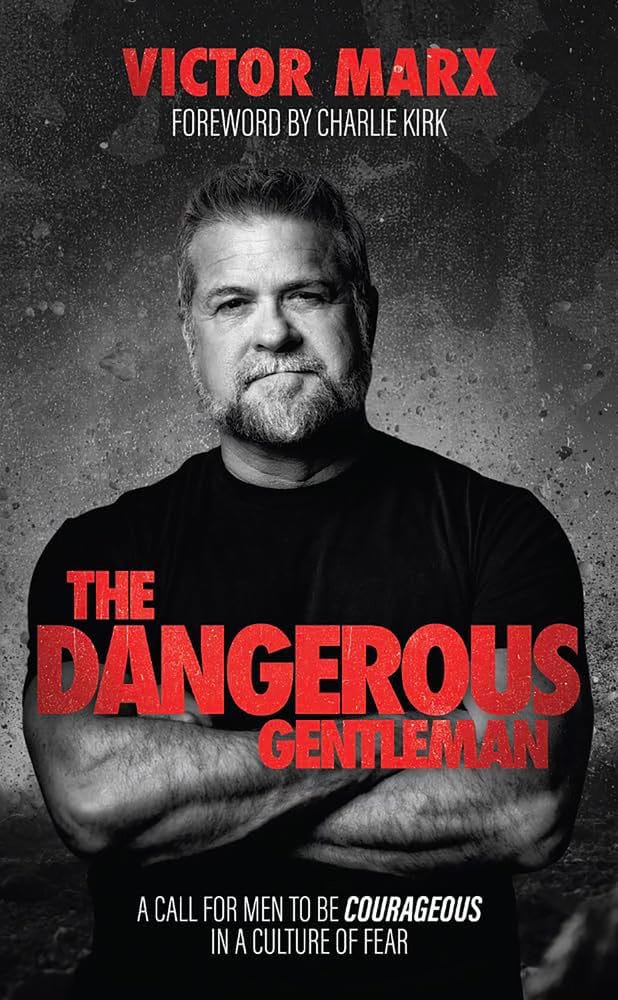
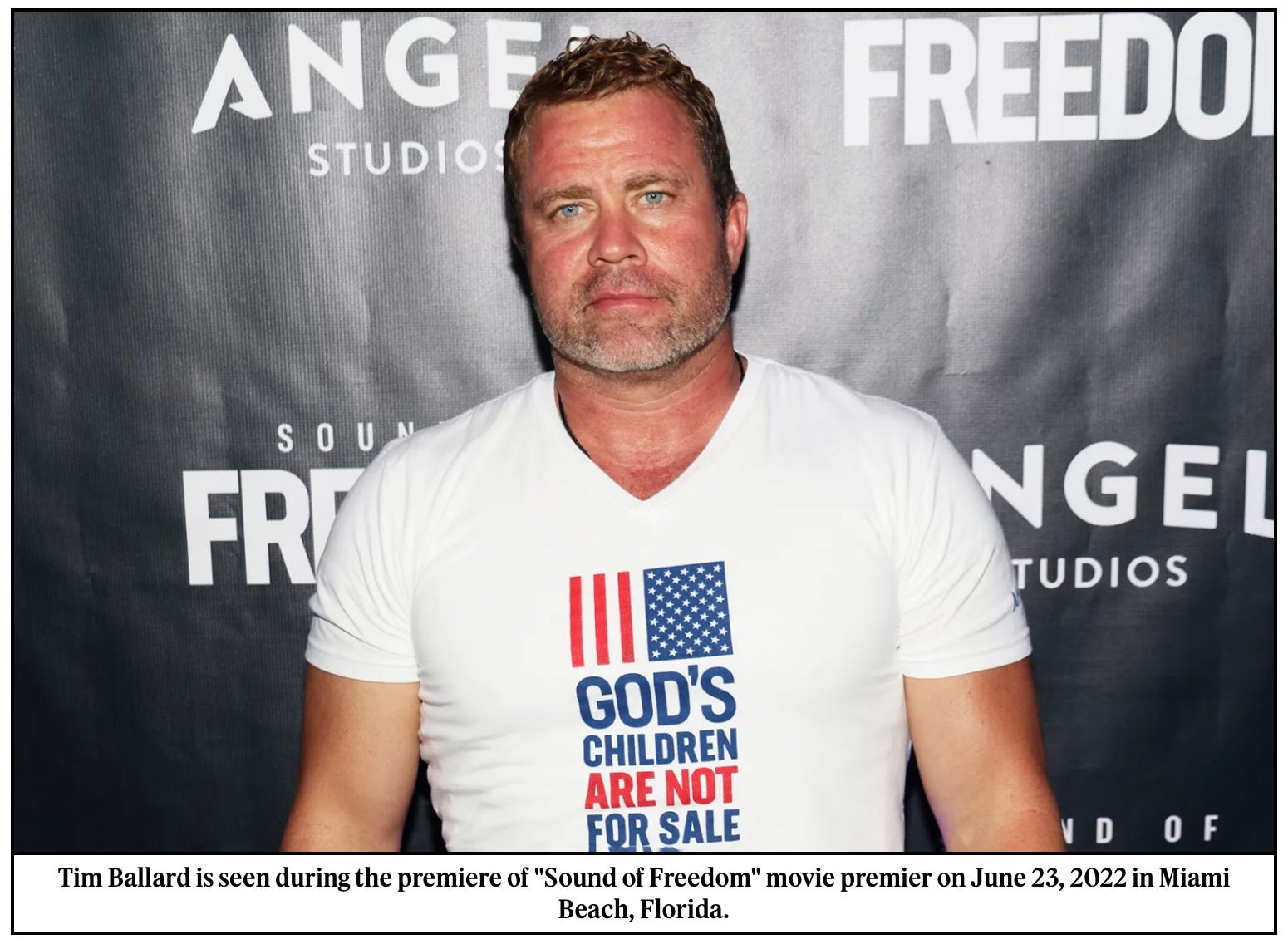
But Marx is not unique. He’s following Tim Ballard’s playbook. Ballard built Operation Underground Railroad (now Our Rescue) into a global brand around combating sex trafficking, beginning in places like Haiti. In 2023 alone, the organization reportedly brought in $74 million, while Ballard himself earned around $600,000. Meanwhile, Sound of Freedom — centered on his story and conveniently released on the Fourth of July — generated $251 million at the box office just as Ballard’s credibility collapsed under scandal, allegations, and eventual resignation. These are not isolated stories. They are symptoms — and perhaps inevitable outgrowths — of the same underlying Tier 1 Christian missions model.
Tier 1 incentives become difficult to ignore for those living and operating within them at the local level. One evening, standing in the park across from my house, a Haitian friend who had spent much of his life in Florida before being deported back to Haiti said something I’ll never forget: “The three highest-paying jobs in Haiti are pastors, politicians, and drug dealers.”
We laughed. But not really.
Then he explained why he was Catholic instead of Baptist. The Catholic priest, he said, had taken a vow of poverty. The Baptist pastor drove a Land Cruiser (MSRP: roughly $70,000) — the only vehicle parked out in front of the church.
Funny. Not funny.
In theory, churches are supported by local tithes and offerings that sustain ministry and leadership. But in Haiti, that model is difficult to scale. Managing sponsorship programs, operating an orphanage, hosting short-term mission teams, or building relationships with foreign donors can become far more financially rewarding than simply generating revenue through a local church. And once someone’s income, status, and influence becomes tied to that, leaving it can mean losing not only a livelihood, but one’s identity as well.
Eventually, Tier 1 will be judged by its outcomes — by their fruits you will know them. Despite decades of effort, billions of dollars, and tens of thousands of institutions, the Tier 1 Christian missions model has not moved the needle enough — if at all. Some would argue Haiti is worse off today than before.
The accountability problems are equally difficult to ignore. International non-profits and their operators can exercise enormous influence over vulnerable communities while facing very little meaningful oversight.
And beneath all of this sits a deeper form of codependency. Americans — the primary financial drivers of modern Christian missions in Haiti — want it because it aligns with how they experience generosity, purpose, and “doing good” or “making a difference.” Haitians often cannot resist it because the resource imbalance is so overwhelming. When one side possesses exponentially more wealth and power than the other, the relationship is never neutral.
It’s gravitational.
Objections from people inside Tier 1 are fairly predictable: You cannot immediately measure outcomes when you are feeding children, educating children, caring for vulnerable people, and sharing the Gospel. “We are building for the future — raising up the next generation.” And to some degree, that is true.
But eventually a harder question has to be asked: if the same model has been repeated for decades with increasing resources and increasingly sophisticated fundraising, yet the outcomes remain largely unchanged, what exactly is being built? Because at some point, repeating the same approach while expecting fundamentally different results stops looking like faith and starts looking more like the definition of insanity.
And perhaps that helps explain why so many young people raised around or within these systems eventually look elsewhere for survival, meaning, identity, and opportunity. Some join gangs. Many line up for TPS.
This is where Tier 2 is a very different approach.
If Tier 1 is made up of professional Christians, Tier 2 is made up of Christian professionals. This distinction matters more than it may initially sound. Tier 1 primarily depends on external funding — in Haiti much of it coming from the United States. Tier 2 depends on local value creation: businesses, jobs, investment, economic growth, functioning markets. It attempts to place responsibility for outcomes, especially for children and families, back into the hands of parents instead of institutions that struggling families often cannot realistically refuse.
But Tier 2 is far more difficult. It lacks the emotional simplicity of Tier 1. It does not mobilize donors as easily. It does not fit neatly into one-week missions trips. It is slower, riskier, less glamorous, and often less profitable in the short term. Building a real business in Haiti is exponentially harder than marketing poverty to Americans. So naturally, Tier 2 remains much smaller, a more narrow way forward.
If I had to estimate, I would guess that Christian missions in Haiti is still more than 90 percent Tier 1 and less than 10 percent Tier 2. Not necessarily because people are malicious, but because Tier 1 is easier. It pays better — for those driving it. It feels good. It’s more fun. It creates emotional attachments. It is incredibly difficult to resist.
In Christian language, Tier 1 is milk. Tier 2 is meat.
But if we are serious about transformation, then we have to honestly ask whether Tier 1 Christian missions is producing it — or quietly preventing it. Wouldn’t it be remarkable if places like Haiti could someday reduce dependence on Christian missions altogether? That alone triggers a subconscious resistance, because for many, Christian missions has become an identity. It is influence. It is income. Entire institutions are built around its continuation.
Last year, the organization I lead generated seven times more revenue through business activity in Haiti than through nonprofit funding. We are not a large organization, but we are punching above our weight. Along the way, that 7:1 ratio helped create more than seventy real jobs — jobs that exist today and will continue to exist regardless of what happens to me or the organization.
Tier 2 is not a program. It’s an ecosystem. And ecosystems multiply impact.
What if the roughly $1 billion flowing into Haiti each year through Christian missions, aid, and charitable conduits catalyzed $7 billion (7:1) in actual economic activity instead? In four years, Haiti’s GDP would double. And if Haiti’s GDP doubled in a relatively short period of time, how many problems would begin resolving themselves? Not all of them. But a surprising number would. I’ve witnessed that in the neighboring Dominican Republic.
And that is the work we are committed to. It is messy, difficult, slow, and often hard to explain — even to my own kids when they ask what exactly it is that I do. But the clearest expression of that vision right now is Côte Brillante, a community we are building around ownership, participation, economic activity, and long-term viability rather than dependency. An ecosystem. We are all in on Tier 2 Christian missions.

And maybe that’s the line we should pay more attention to — the line between systems that require brokenness in order to sustain themselves and systems that make it possible to emerge from brokenness and leave the corrosive parts behind.
At some point, every organization, donor, missionary, pastor, and participant in Christian missions has to decide which kind of system they are helping build.
And whether they are willing to change — even if changing costs them something.